Getting sick or injured while traveling in Japan can feel confusing, especially if you do not speak Japanese or do not know whether to go to a drugstore, clinic, hospital, or emergency room.
This guide explains how travelers can seek medical care in Japan, when to call 119, how to look for clinics or hospitals, what to bring, what medical costs may look like, and what to do if you forgot your regular medicine.
This article is for general information only. It does not replace medical advice, diagnosis, or treatment. If symptoms are severe, unusual, getting worse, or not improving, please seek medical care.
- Quick Answer: What to Do First
- Simple Flow for Medical Care in Japan
- When to Call 119
- Drugstore, Clinic, Hospital, or Emergency Room?
- Official Tools and Help Pages
- What to Bring to a Clinic or Hospital
- Medical Costs and Travel Insurance
- If You Forgot Your Regular Medicine
- Useful Japanese Phrases to Show Staff
- Before You Go: Prepare a Simple Health Note
- FAQ
- Related Guides
- References
Quick Answer: What to Do First
If you feel seriously unwell in Japan, call 119 or ask nearby staff to call 119 for you. This is the emergency number for ambulance and fire services in Japan.
If the situation is not an emergency but you need diagnosis, tests, or prescription medicine, look for a clinic or hospital. A drugstore may help with mild symptoms and OTC medicine questions, but it cannot diagnose illness or prescribe most regular medicines.
Bring your passport, travel insurance information, medicine list, allergy information, payment method, and any photos of medicines or prescriptions you normally use.
Simple Flow for Medical Care in Japan
- If symptoms are severe or urgent, call 119.
- If symptoms are not urgent but need diagnosis or prescription treatment, look for a clinic or hospital.
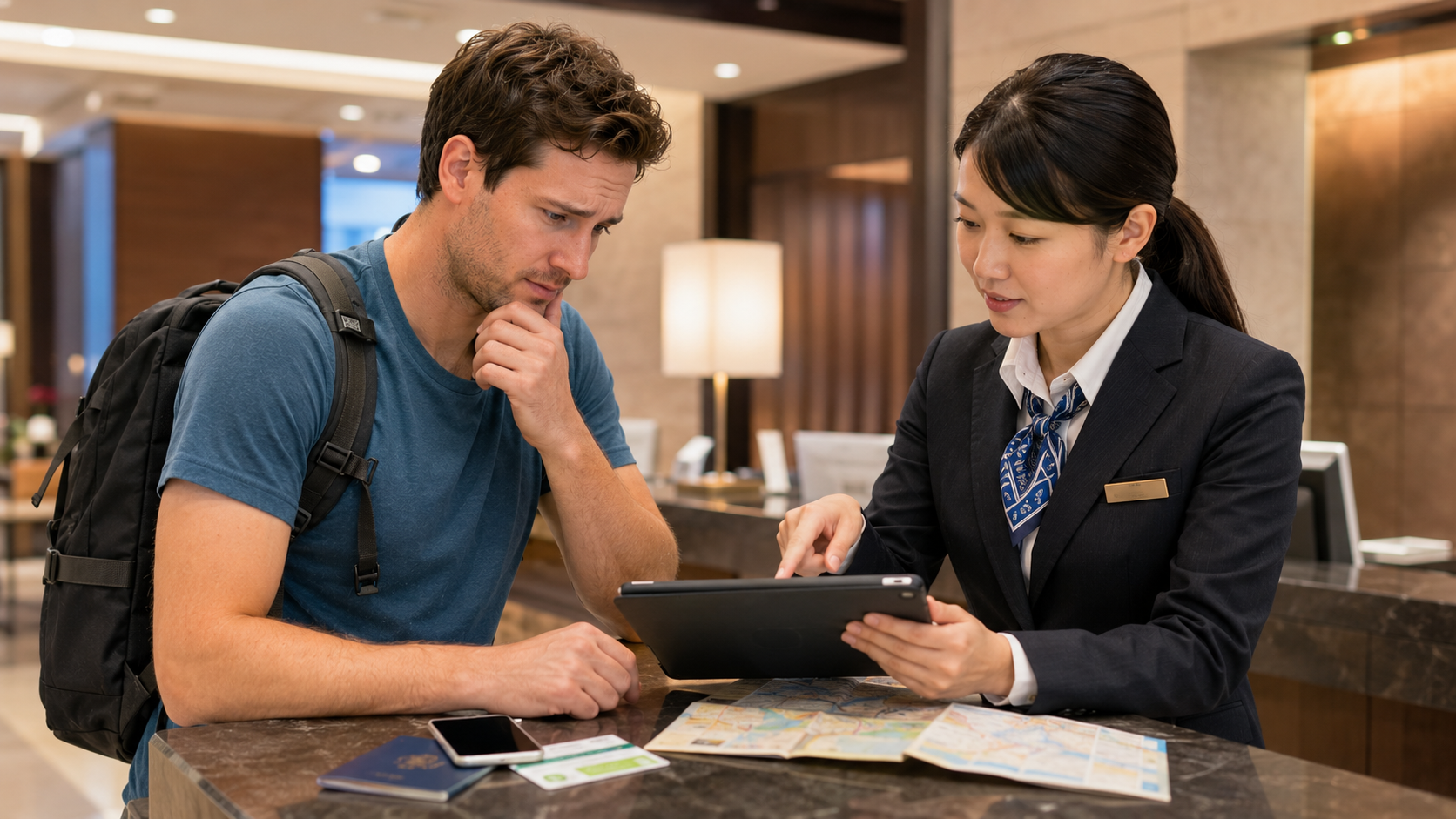
- If you are staying at a hotel, ask hotel staff to help you find a medical facility or call ahead.
- Use official search tools or local consultation centers when possible.
- Bring documents, medicine information, and payment method.
- If you do not have Japanese public health insurance, expect to pay the full medical cost first.
- Keep receipts and medical documents for travel insurance claims.
When to Call 119
Call 119 or ask someone nearby to call if symptoms feel severe, urgent, or dangerous.
- trouble breathing
- chest pain
- loss of consciousness, fainting, seizure, or confusion
- severe allergic reaction or swelling of the face, lips, tongue, or throat
- severe injury, heavy bleeding, or serious burn
- sudden severe headache, weakness, or neurological symptoms
- severe abdominal pain
- repeated vomiting, signs of dehydration, or severe heat illness symptoms
- rash with fever, blisters, peeling skin, mouth sores, or eye symptoms after taking medicine
This list is not complete. If something feels seriously wrong, do not wait for OTC medicine to work.
If you are in a hotel, station, store, tourist facility, or restaurant, ask staff for help. Showing a short message can be useful: Please call 119. I need medical help.
Drugstore, Clinic, Hospital, or Emergency Room?
The right place depends on severity, timing, and whether you need diagnosis or prescription treatment.
| Situation | Where to Start |
| Mild symptoms and OTC medicine questions | Drugstore or pharmacy |
| Symptoms need diagnosis or prescription medicine | Clinic |
| Symptoms are complex, worsening, or may need tests | Hospital or clinic with appropriate department |
| Severe or urgent symptoms | Call 119 |
| Nighttime, holiday, or you cannot find care | Ask hotel staff, local consultation center, or emergency guidance |
A pharmacy can help you choose OTC medicine, but it cannot replace medical care when symptoms are severe, unusual, getting worse, or not improving.
Official Tools and Help Pages
When possible, use official or public medical information tools rather than relying only on search results.
| Resource | How It Can Help |
| JNTO Guide for when you are feeling ill | Traveler-focused guidance for illness, medical care, and emergency situations in Japan. |
| Medical Information Net (NAVII) | Search for medical institutions in Japan. |
| Medical institutions accepting international patients | Search medical institutions that may accept international patients. |
| MHLW local consultation centers | Information on local call centers and consultation desks. |
| JNTO travel insurance information | Information about travel insurance for visitors to Japan. |
Language support, opening hours, departments, and payment methods vary by facility. If possible, call ahead or ask hotel staff to help confirm whether the facility can see you.
What to Bring to a Clinic or Hospital
- passport
- travel insurance card or policy information
- cash and credit card
- list of current medicines and supplements
- medicine packages, photos, prescriptions, or medication records
- allergy information
- symptom timeline: when symptoms started, what changed, and what you already took
- contact information for your hotel or travel companion
If you have taken OTC medicine in Japan, bring the package or take a photo of the front label and ingredient panel.
Medical Costs and Travel Insurance
Short-term visitors usually do not have Japanese public health insurance. This means you may need to pay the full cost of the visit, tests, treatment, and prescriptions.
Ambulance use and hospital treatment are not the same thing. Even if an ambulance is called, hospital care, tests, medicines, and follow-up treatment can still be billed.
If you have travel insurance, contact the assistance service when possible. Some plans may arrange cashless service at selected facilities, while others require you to pay first and claim reimbursement later.
Ask the facility for receipts, medical statements, and documents needed for your insurance claim.
If You Forgot Your Regular Medicine
Travelers sometimes visit a pharmacy because they forgot their regular prescription medicine. In Japan, many regular medicines are not available as OTC medicines.
If the medicine is not sold as an OTC medicine in Japan, you will usually need to see a doctor and receive a Japanese prescription. A pharmacy may not be able to sell an equivalent medicine without a prescription.
Bring or show as much information as possible: medicine name, active ingredient, strength, dose, package, prescription record, medication notebook, or a photo.
Useful phrase: I forgot to bring my regular medicine. I would like to ask whether I need to see a doctor for a prescription.
Useful Japanese Phrases to Show Staff
You can show these phrases to hotel staff, pharmacy staff, clinic staff, or hospital reception.
| What you mean | Japanese to show |
| I need medical care. | 医療機関を受診したいです。 |
| Please call 119. | 119番に電話してください。 |
| I need help finding a clinic or hospital. | 病院やクリニックを探すのを手伝ってください。 |
| I do not speak Japanese well. | 日本語があまり話せません。 |
| Do you have English language support? | 英語対応は可能ですか? |
| I have taken this medicine. | この薬を飲みました。 |
| I have an allergy. | アレルギーがあります。 |
| I forgot to bring my regular medicine. | 定期的に飲んでいる薬を持ってくるのを忘れました。 |
| I need a prescription for my regular medicine. | 定期薬の処方について相談したいです。 |
| I need documents for my travel insurance claim. | 保険請求に必要な書類が必要です。 |
| Can I get a receipt and medical statement? | 領収書と診療明細書をもらえますか? |
For pharmacy-specific questions, see: Show This at a Japanese Pharmacy: OTC Medicine Questions in English and Japanese.
Before You Go: Prepare a Simple Health Note
If you have a chronic condition or take regular medicines, it can help to prepare a simple health note before or during your trip.
- medical conditions
- medicine names and active ingredients
- dose and schedule
- allergies
- emergency contact
- travel insurance assistance number
A photo of your medicine package, prescription record, or medication list can also help if you need medical care in Japan.
FAQ
Can tourists see a doctor in Japan?
Yes. Travelers can seek medical care in Japan. However, short-term visitors usually do not have Japanese public health insurance, so they may need to pay the full medical cost.
Should I go to a drugstore or a clinic?
A drugstore may be enough for mild symptoms and OTC medicine questions. A clinic or hospital is more appropriate when symptoms need diagnosis, prescription treatment, tests, or urgent care.
Can I find an English-speaking doctor in Japan?
Sometimes, especially in major cities and tourist areas. Language support varies, so use official search tools, ask hotel staff, and contact your travel insurance assistance service when possible.
Can I buy my regular prescription medicine at a Japanese drugstore?
Not always. Many regular prescription medicines are not sold as OTC medicines in Japan. You may need to see a doctor and receive a Japanese prescription.
What should I do if I feel too sick to decide?
Ask hotel staff, nearby staff, or someone around you for help. If symptoms are severe or feel urgent, call 119.
Related Guides
- Drugstore Basics in Japan: How to Buy OTC Medicine Safely
- Show This at a Japanese Pharmacy: OTC Medicine Questions in English and Japanese
- Heat Illness in Japan: What Travelers Should Check Before Taking Fever Medicine
- Skin Rash and Itching Medicine in Japan: OTC Creams and Safety Checks
- For Hotels and Tourism Partners
References
- Japan National Tourism Organization (JNTO). For safe travels in Japan: Guide for when you are feeling ill.
- Ministry of Health, Labour and Welfare. Medical Information Net (NAVII).
- Medical institutions accepting international patients in Japan.
- Ministry of Health, Labour and Welfare. Information on Local Call Centers.
- Japan National Tourism Organization (JNTO). Travel Insurance in Japan.