If you lost, forgot, or ran out of your prescription medicine while traveling in Japan, the short answer is:
Do not assume a Japanese drugstore can simply replace it. If the medicine is important, contact your travel insurance assistance line and consider seeing a clinic or hospital in Japan.
Use this guide as a practical first step. It is not personal medical advice.
- Quick Answer: What Should You Do First?
- The Most Important Things First
- Step 1: Decide If It Is Urgent
- Step 2: Gather Medicine Information
- Step 3: Contact Travel Insurance
- Step 4: Visit a Clinic or Hospital If You Need Prescription Medicine
- Step 5: Ask a Pharmacist, But Be Clear
- Do Not Ship Medicine Without Checking
- Useful Japanese Phrases
- Bottom Line
- Sources
Quick Answer: What Should You Do First?
| Situation | First step |
| You feel seriously unwell, confused, faint, short of breath, have chest pain, seizure symptoms, severe allergic symptoms, or a dangerous withdrawal risk | Call 119 or go to emergency care |
| You lost an important daily medicine | Contact your travel insurance assistance line and your doctor or pharmacy at home |
| You have a copy of your prescription or medicine list | Bring it to a clinic or hospital in Japan |
| You only know the brand name | Try to find the generic ingredient name before asking for help |
| You lost a controlled, injectable, refrigerated, or hard-to-replace medicine | Do not wait. Contact insurance support, a medical institution, and official sources if import rules may apply |
| You need only mild symptom relief | Ask a pharmacist or registered seller about OTC options, but explain what prescription medicine you lost |
The Most Important Things First
- A Japanese drugstore may not be able to replace prescription medicine without a prescription from a medical institution in Japan.
- Foreign brand names may not exist in Japan, so the generic ingredient name is very important.
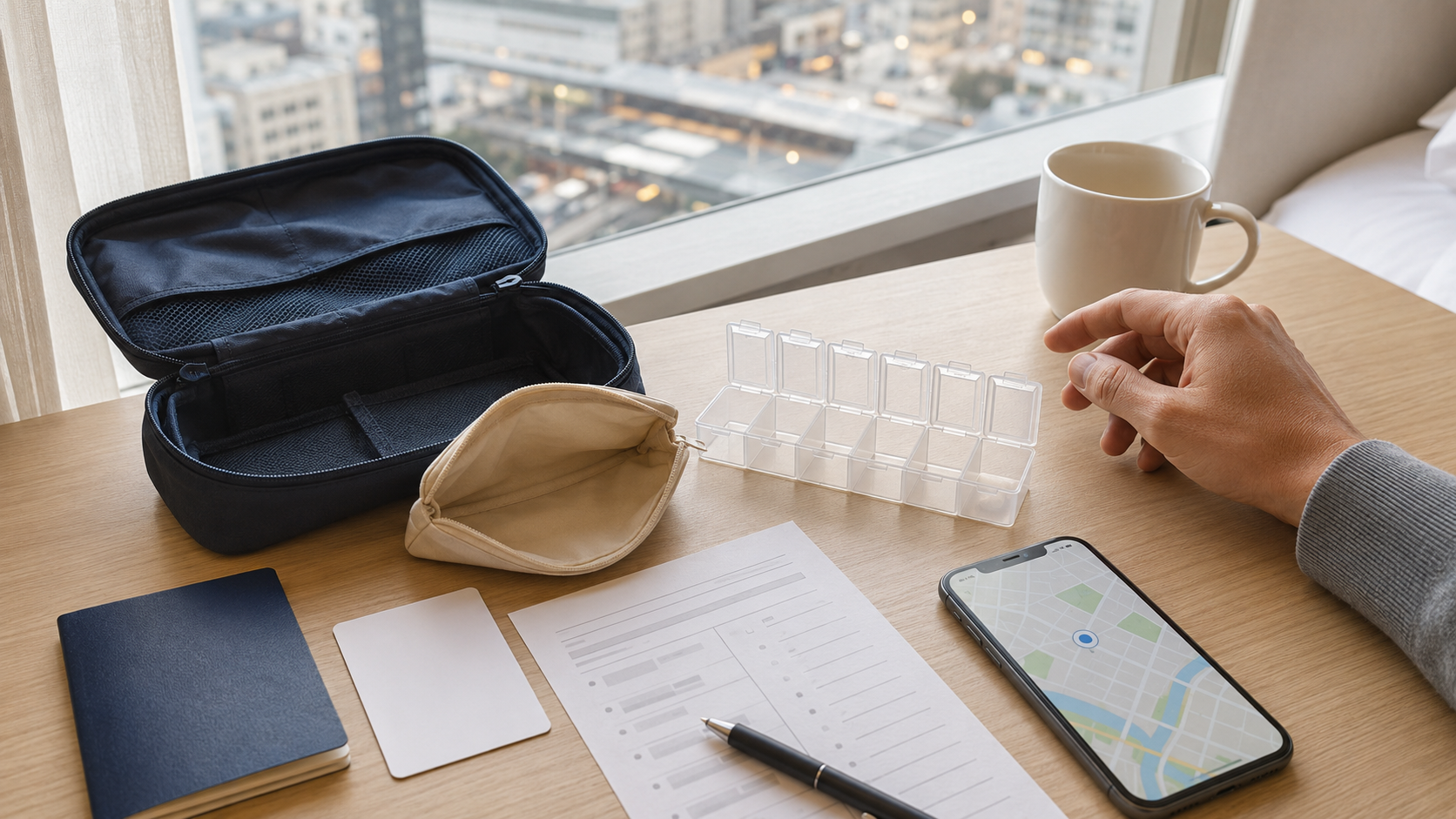
- Bring your passport, insurance details, medicine package, photos, prescription copy, dose, allergy list, and diagnosis name if you have them.
- If your medicine is essential, contact your travel insurance assistance line early. They may help find English-friendly medical care.
- Do not mail replacement medicine to Japan without checking import rules first.
Step 1: Decide If It Is Urgent
Some lost or forgotten medicines can wait until regular clinic hours. Others cannot.
Seek urgent help if missing the medicine could cause serious symptoms, or if you already feel very unwell. Examples include severe chest pain, trouble breathing, fainting, seizure symptoms, severe confusion, severe allergic symptoms, strong withdrawal symptoms, or rapidly worsening illness.
In Japan, call 119 for an ambulance.
For general care navigation, see: Where Should I Go If I Feel Sick in Japan? Drugstore, Pharmacy, Clinic, Hospital, or 119.
Step 2: Gather Medicine Information
Before contacting a clinic, hospital, insurance company, or pharmacy, collect as much information as possible:
- medicine name and generic ingredient name
- strength, dose, and how often you take it
- why you take it, if you are comfortable sharing
- photos of the package, bottle, label, or pill sheet
- prescription copy or patient portal screenshot
- doctor’s letter, if you have one
- allergy list and other medicines you take
If you only know the brand name, contact your doctor or home pharmacy and ask for the generic ingredient name.
Step 3: Contact Travel Insurance
If you have travel insurance, contact the assistance line before choosing a clinic when possible.
They may help with:
- finding English-friendly medical care
- interpretation support
- cashless payment arrangements
- documents for claims
- choosing whether a clinic or hospital is more appropriate
Without travel insurance, you may need to pay the full cost yourself at the clinic, hospital, and pharmacy.
Step 4: Visit a Clinic or Hospital If You Need Prescription Medicine
Japan has OTC medicines, but many regular medicines require a prescription.
If you need a prescription medicine replaced, a clinic or hospital may need to examine you and decide whether a Japanese prescription is appropriate. After that, the medicine may be dispensed at the medical institution or at a pharmacy.
Availability is not guaranteed. The same brand, dose, formulation, or controlled medicine may not be available in Japan.
For a step-by-step guide, see: How to See a Doctor in Japan as a Traveler.
Step 5: Ask a Pharmacist, But Be Clear
A pharmacist or registered seller can help you understand OTC options and where to go next, but do not ask them only for “the same medicine” by brand name.
Show your medicine information and say that it is your regular prescription medicine.
For drugstore basics, see: Drugstore Basics in Japan: How to Buy OTC Medicine Safely.
Do Not Ship Medicine Without Checking
It may feel tempting to ask someone at home to mail your medicine to Japan. Do not do this without checking Japanese import rules.
Some prescription medicines, controlled medicines, injections, syringes, or larger quantities may need advance confirmation or separate permission. Some medicines may not be allowed.
For medicine import rules, see: Bringing Medicine to Japan: What Travelers Should Know Before Packing Medications.
Useful Japanese Phrases
| English | Japanese |
| I lost my prescription medicine. | 処方薬をなくしました。 |
| I take this medicine every day. | この薬を毎日飲んでいます。 |
| This is the medicine name. | これが薬の名前です。 |
| This is the generic ingredient name. | これが一般名・成分名です。 |
| I have a copy of my prescription. | 処方箋のコピーがあります。 |
| I need to see a doctor. | 医師の診察を受けたいです。 |
| I have travel insurance. | 海外旅行保険に入っています。 |
Bottom Line
If you lose, forget, or run out of prescription medicine in Japan, the safest first steps are:
- Check whether the situation is urgent.
- Gather the generic name, dose, photos, prescription copy, and insurance details.
- Contact travel insurance support if you have it.
- Visit a clinic or hospital if prescription medicine needs to be replaced.
- Do not ship replacement medicine to Japan without checking import rules.
The more medicine information you can show, the easier it is for medical staff and pharmacy staff to help you.
Sources
- JNTO. For safe travels in Japan – Guide for when you are feeling ill.
- Ministry of Health, Labour and Welfare. We strongly recommend enrolling in private health insurance for international visitors.
- Tokyo Metropolitan Government. Japan’s medical system.
- Ministry of Health, Labour and Welfare. Information for those who are bringing medicines for personal use into Japan.
- Narcotics Control Department, Ministry of Health, Labour and Welfare. Application Guidance.