If you want to take more than one Japanese OTC medicine, the quick answer is:
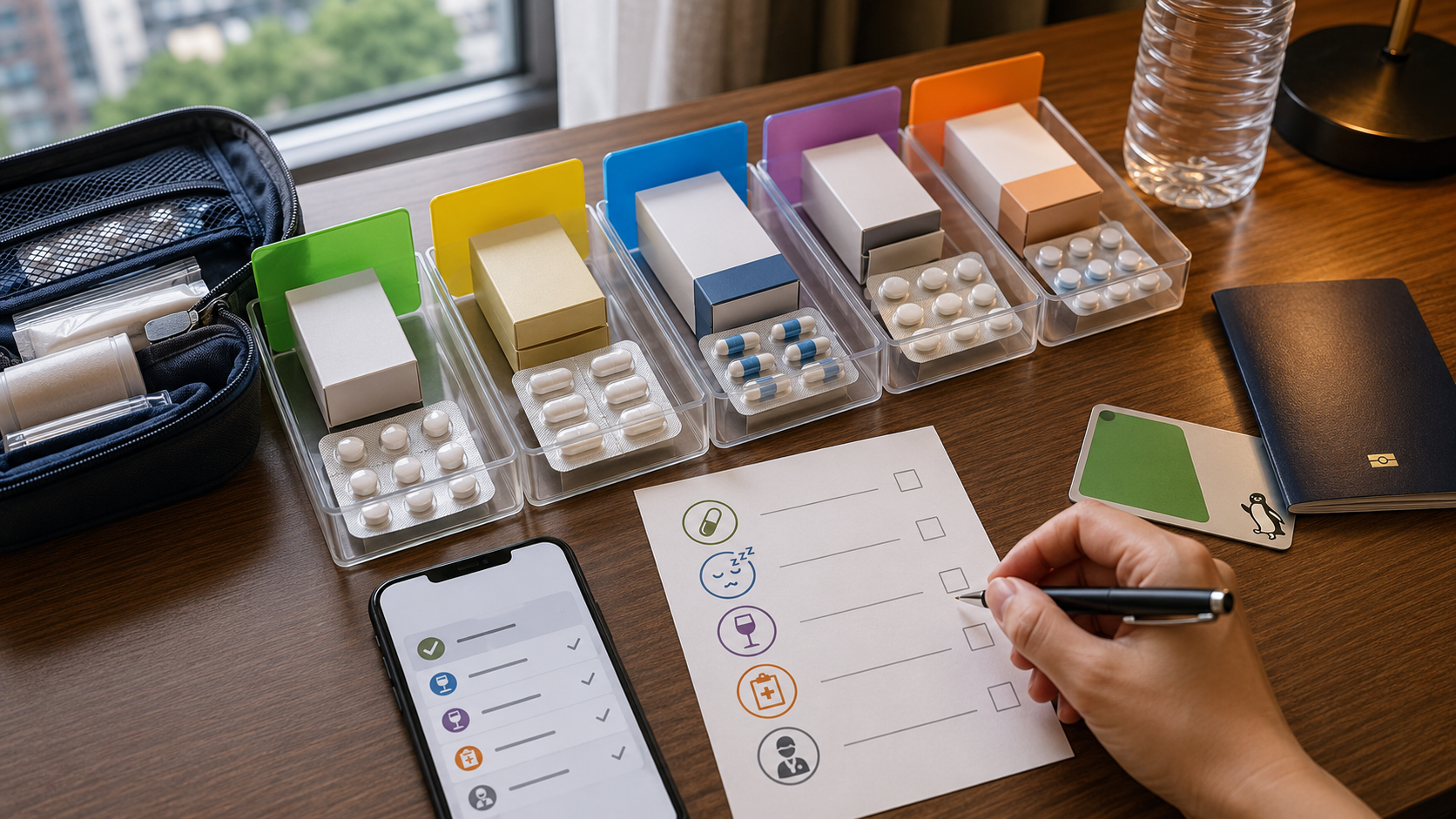
Do not combine medicines by brand name. Compare the active ingredients and effect types first. Be especially careful with cold medicine + pain/fever medicine, allergy medicine + motion sickness medicine, multiple pain relievers, alcohol + drowsy medicine, and Japanese OTC medicine + prescription medicine from home. When in doubt, show all packages to a pharmacist or registered seller before taking them together.
This article is not a list of safe or unsafe combinations. It is a quick checklist to help travelers avoid the most common mistakes.
Quick Checklist Before Combining
| Check this first | Why it matters |
|---|---|
| Same active ingredient? | Two products may both contain acetaminophen, ibuprofen, loxoprofen, aspirin, or an antihistamine |
| Same purpose? | Two cold medicines or two pain medicines can duplicate effects |
| Drowsiness warning? | Cold, allergy, motion sickness, sleep, and cough products may overlap |
| Alcohol today? | Alcohol can increase drowsiness and may matter with some pain/fever medicines |
| Prescription medicine from home? | Interactions can happen even if the Japanese product is OTC |
| Child, pregnancy, older adult, chronic disease? | Age, pregnancy, liver/kidney disease, stomach ulcer history, asthma, heart disease, and other conditions can change the answer |
Combinations to Check Carefully
These are not always forbidden, but they are common places where travelers make mistakes.
1. Cold Medicine + Pain or Fever Medicine
Many cold medicines already contain a pain/fever ingredient such as acetaminophen, ibuprofen, or sometimes loxoprofen. If you add a separate pain reliever, you may double up.
For pain reliever basics, see: Loxoprofen vs Acetaminophen in Japan
For Pabron-type cold medicine checks, see: Which Pabron Should I Buy in Japan?
2. Allergy Medicine + Motion Sickness Medicine
Some allergy medicines, motion sickness medicines, cold medicines, and sleep-support products can cause drowsiness, dry mouth, blurred vision, or difficulty urinating. Combining them may make those effects stronger.
This matters if you plan to drive, cycle, hike, drink alcohol, or travel alone.
For allergy medicine basics, see: Drowsy vs Non-Drowsy Allergy Medicine in Japan
For motion sickness medicine basics, see: Travelmin vs Aneron
3. Two Pain Relievers
Do not casually combine two pain relievers just because the brand names are different. Some products contain one ingredient, while others combine ingredients such as ibuprofen + acetaminophen.
If you already took a pain reliever, show the package or a photo before buying another one.
4. Alcohol + OTC Medicine
Alcohol can make drowsiness worse with some allergy, cold, cough, sleep, and motion sickness medicines. It may also matter when using pain/fever medicines, especially if you drank heavily or are dehydrated.
For hangover-related checks, see: Hangover in Japan
5. Japanese OTC Medicine + Your Regular Medicine
If you take regular medicine for blood pressure, diabetes, asthma, heart disease, kidney disease, mental health, sleep, blood thinning, seizures, or another chronic condition, ask before adding Japanese OTC medicine.
Bring the package, a photo, or a medicine list. Ingredient names matter more than brand names.
What to Show Pharmacy Staff
When asking at a Japanese drugstore, show:
- all Japanese OTC medicine boxes you plan to use
- any medicine you already took today
- prescription medicine from your home country
- allergies and chronic conditions
- who will use the medicine
- age, pregnancy/breastfeeding status, and alcohol use if relevant
If possible, keep the outer box and package insert until you finish the medicine.
Useful Japanese Phrases
| English meaning | Japanese to show |
|---|---|
| Can I take these together? | これらは一緒に使えますか? |
| Please check whether the ingredients overlap. | 成分が重なっていないか確認してください。 |
| I already took this medicine today. | 今日はすでにこの薬を飲みました。 |
| Does this contain acetaminophen / ibuprofen / loxoprofen? | これはアセトアミノフェン / イブプロフェン / ロキソプロフェンを含んでいますか? |
| Will this make me sleepy? | これは眠くなりますか? |
| I take prescription medicine. | 処方薬を飲んでいます。 |
| Is it better to use only one product? | 1つだけにした方がよいですか? |
Small Warning Signs
Get medical help or call 119 in Japan if symptoms are severe, rapidly worsening, or include trouble breathing, chest pain, severe allergic reaction, confusion, fainting, severe sleepiness, repeated vomiting, black stool, severe abdominal pain, or you may have taken more than directed.
For emergency numbers, see: Emergency Numbers in Japan
Summary
Before combining Japanese OTC medicines:
- Check active ingredients, not only brand names.
- Avoid doubling pain/fever ingredients.
- Watch drowsy ingredients across cold, allergy, motion sickness, sleep, and cough products.
- Be extra careful with alcohol, regular prescriptions, children, pregnancy, older age, and chronic disease.
- Show everything to pharmacy staff before taking medicines together.
Related Guides
- OTC Drug Classes in Japan
- Drugstore Basics in Japan
- Loxoprofen vs Acetaminophen in Japan
- Drowsy vs Non-Drowsy Allergy Medicine in Japan
- Travelmin vs Aneron
References
- PMDA. Q6: Points to note when using OTC medicines. https://www.pmda.go.jp/safety/consultation-for-patients/on-drugs/qa/0011.html
- PMDA. OTC and guidance-required medicine package insert search. https://www.pmda.go.jp/PmdaSearch/otcSearch/
- FDA. Don’t Overuse Acetaminophen. https://www.fda.gov/consumers/consumer-updates/dont-overuse-acetaminophen
- FDA. The best way to take your over-the-counter pain reliever? Seriously. https://www.fda.gov/drugs/safe-use-over-counter-pain-relievers-and-fever-reducers/best-way-take-your-over-counter-pain-reliever-seriously-four-panel-brochure
- NHS. Antihistamines. https://www.nhs.uk/medicines/antihistamines/
- Ministry of Health, Labour and Welfare. OTC medicine overdose information. https://www.mhlw.go.jp/stf/seisakunitsuite/bunya/index_00010.html